AIFactory — a guided tour
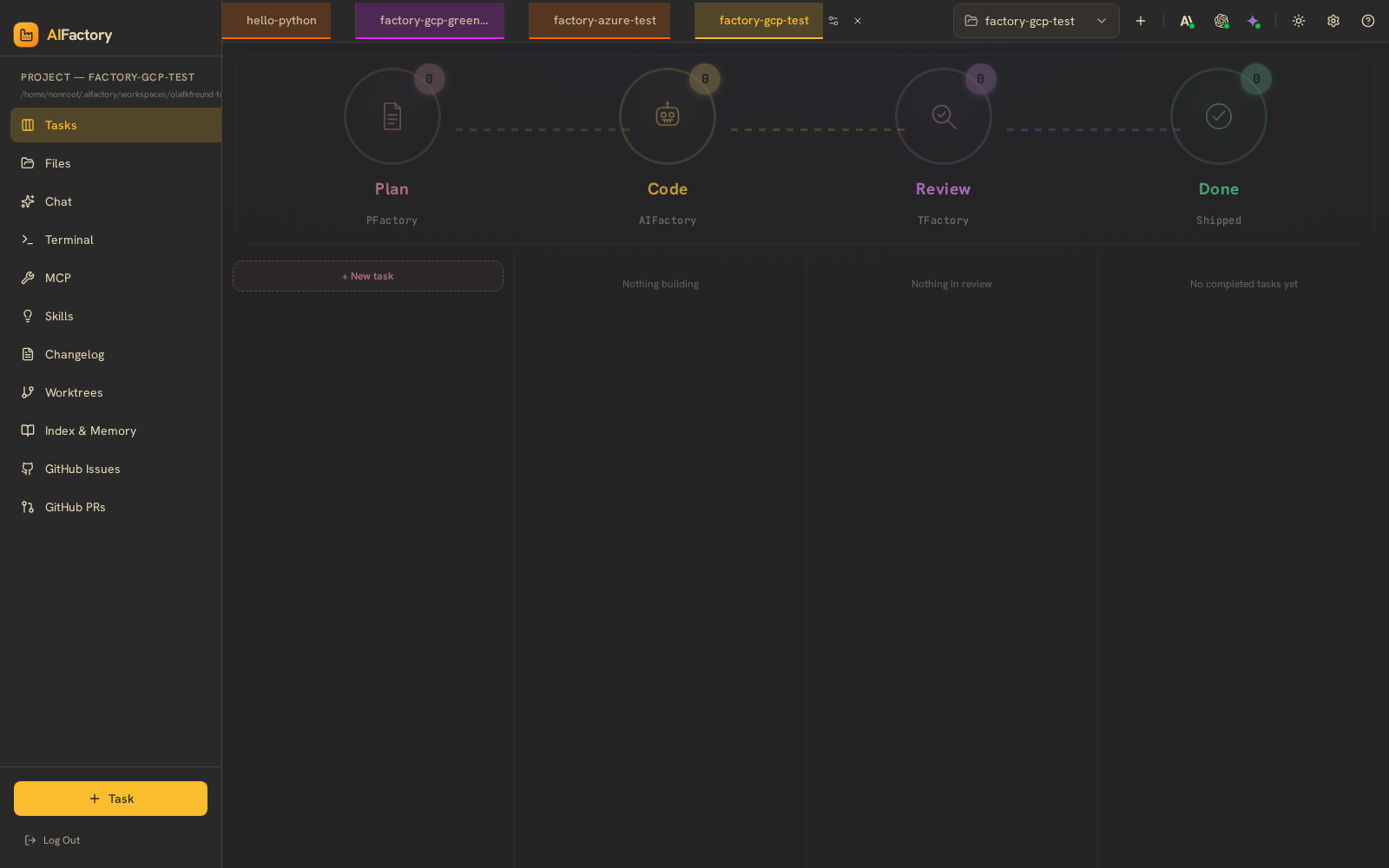
AIFactory turns a written spec into merge-ready code through the PARR loop — Prepare · Act · Reflect · Review — in an isolated git worktree, with you in control at every gate. Here’s what that looks like in the product.
Mission control
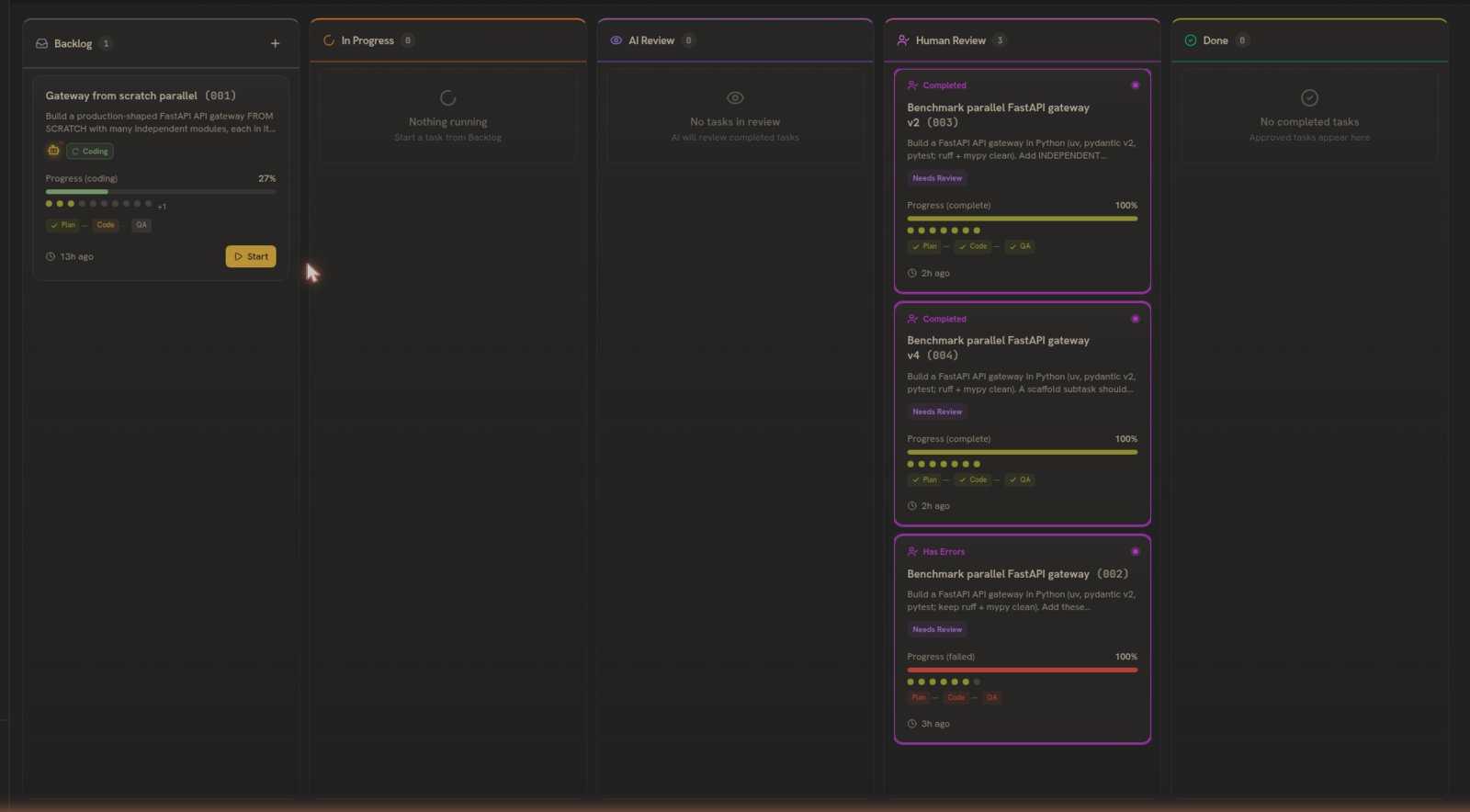
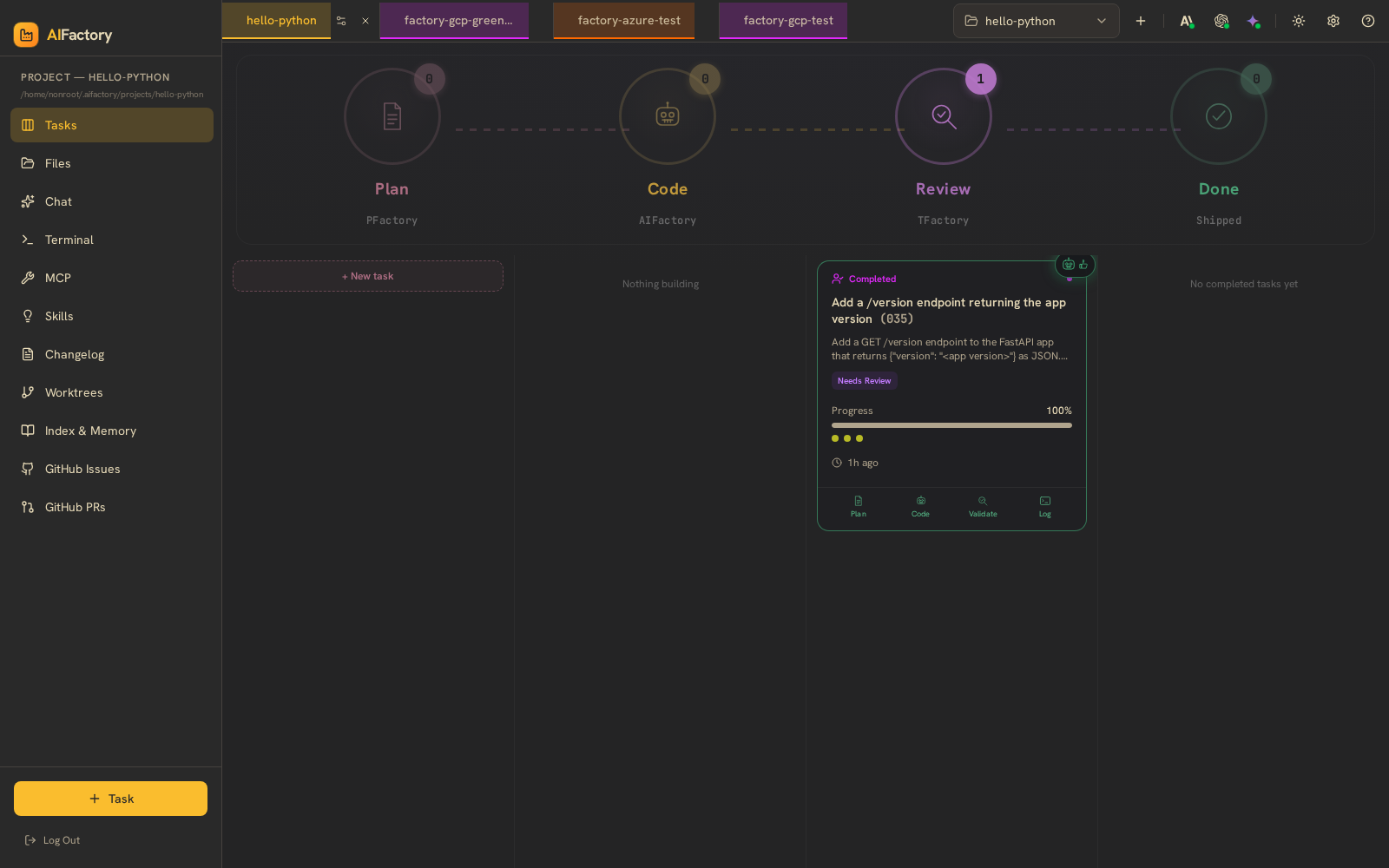
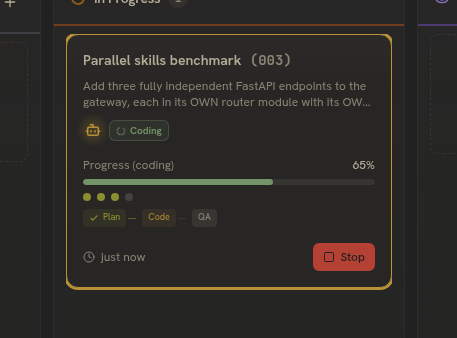
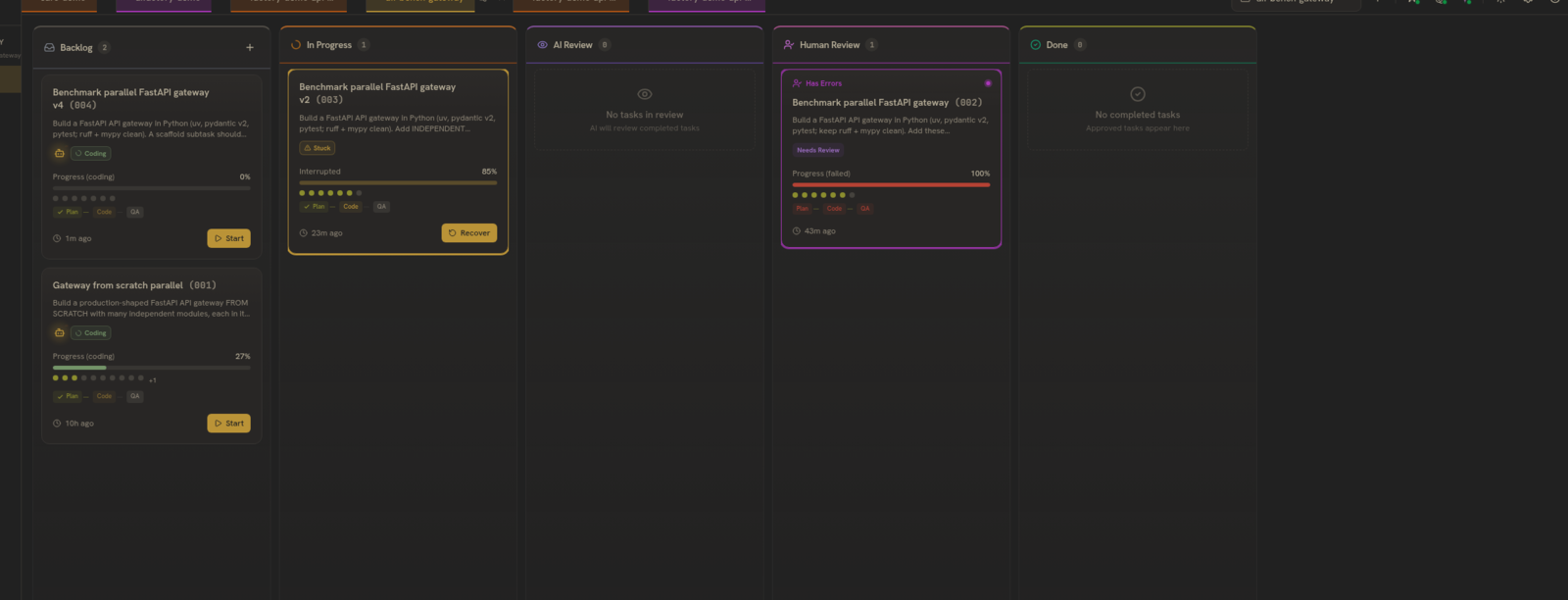
Every unit of work moves left-to-right across a board you can read at a glance — from Backlog through In Progress, AI Review, Human Review, and Done — with live PARR-stage dots and progress on each card.
Inside a task
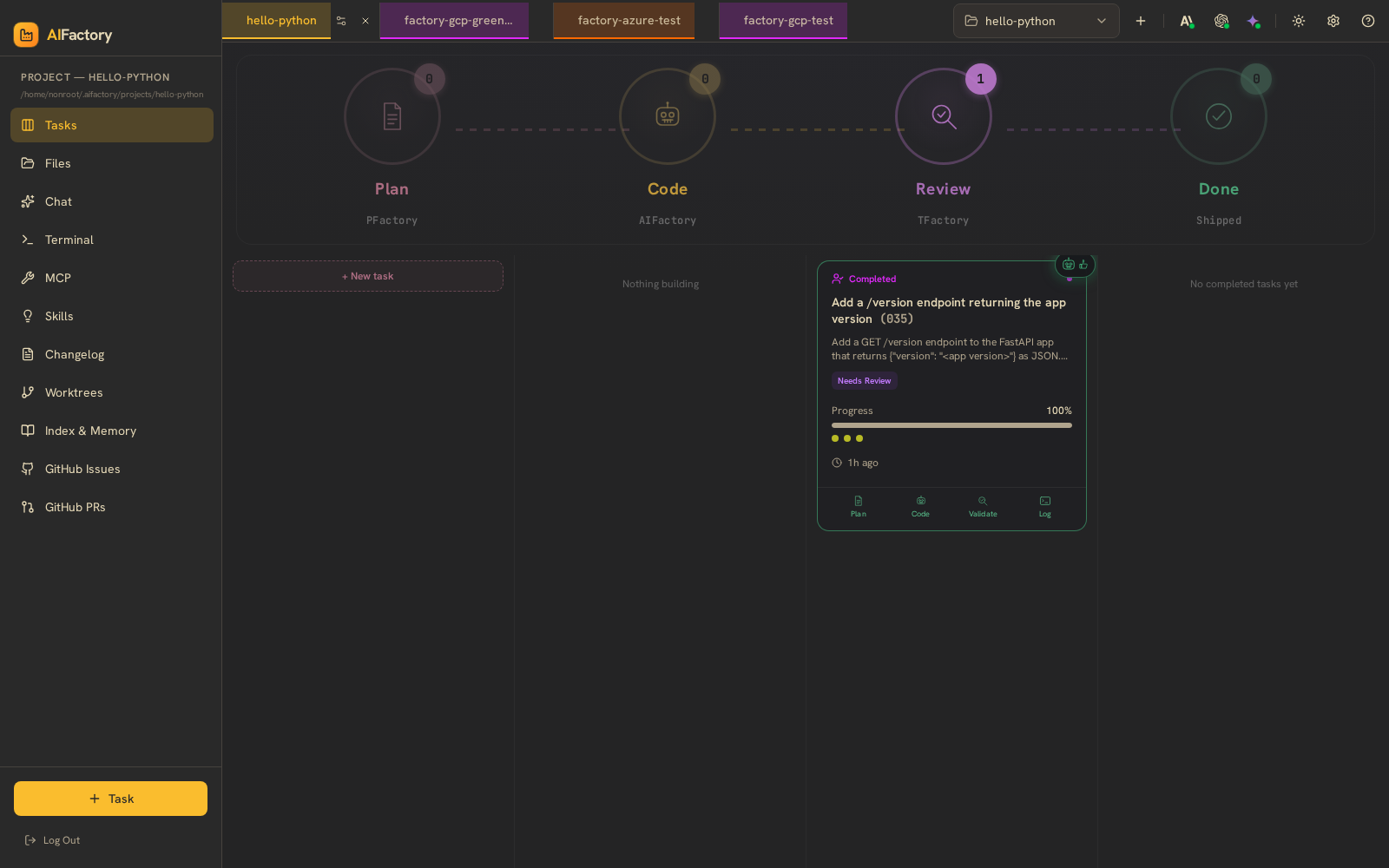
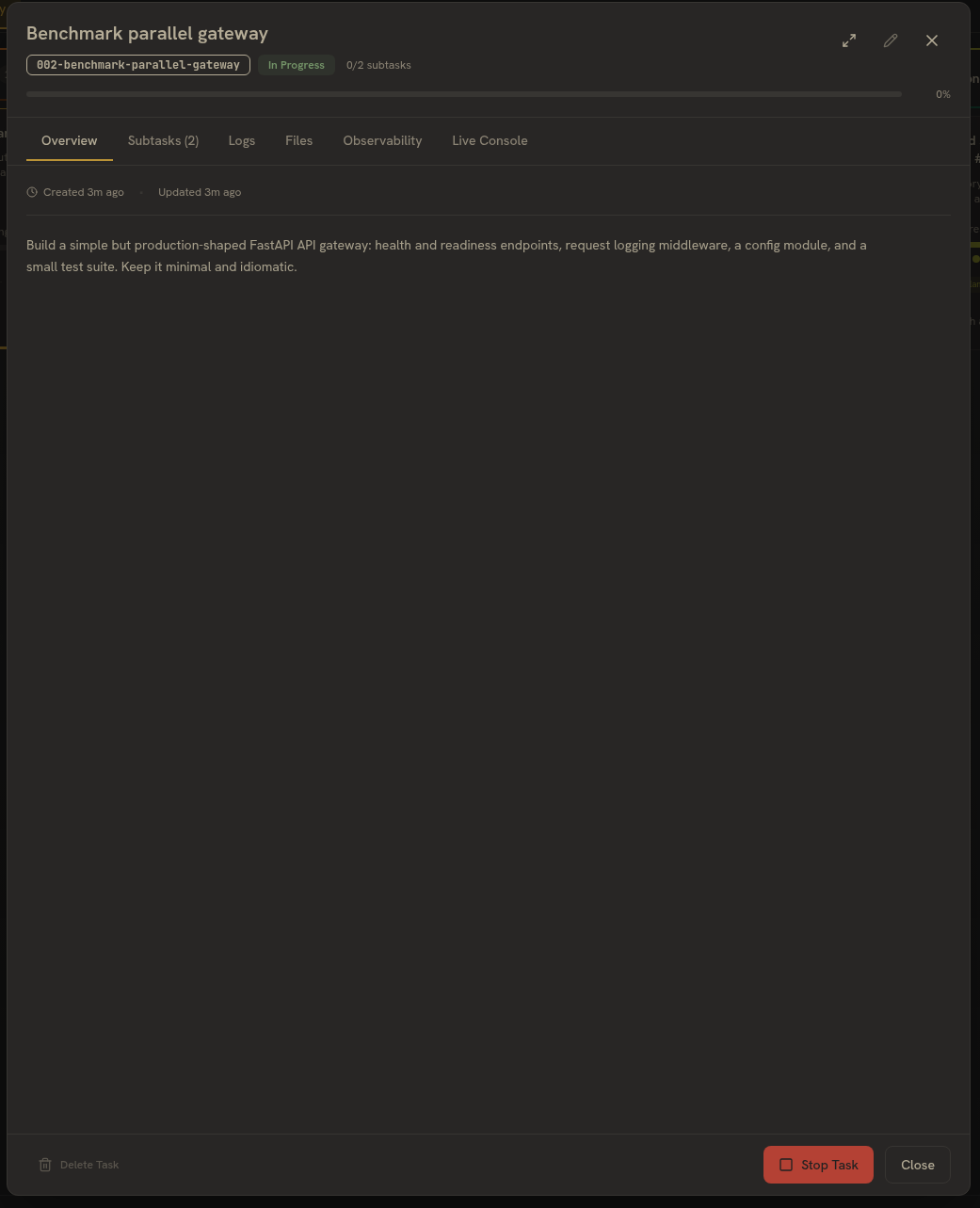
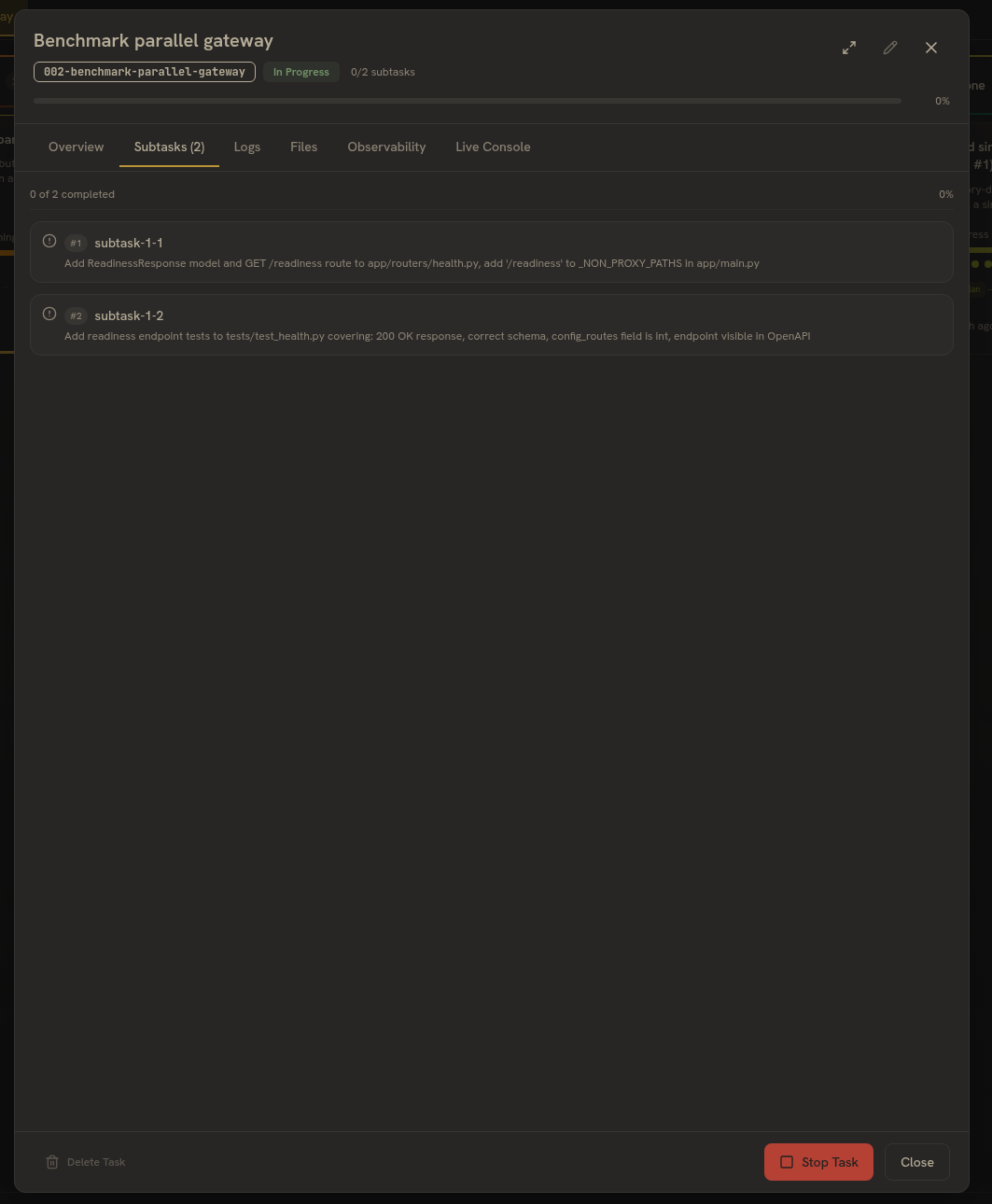
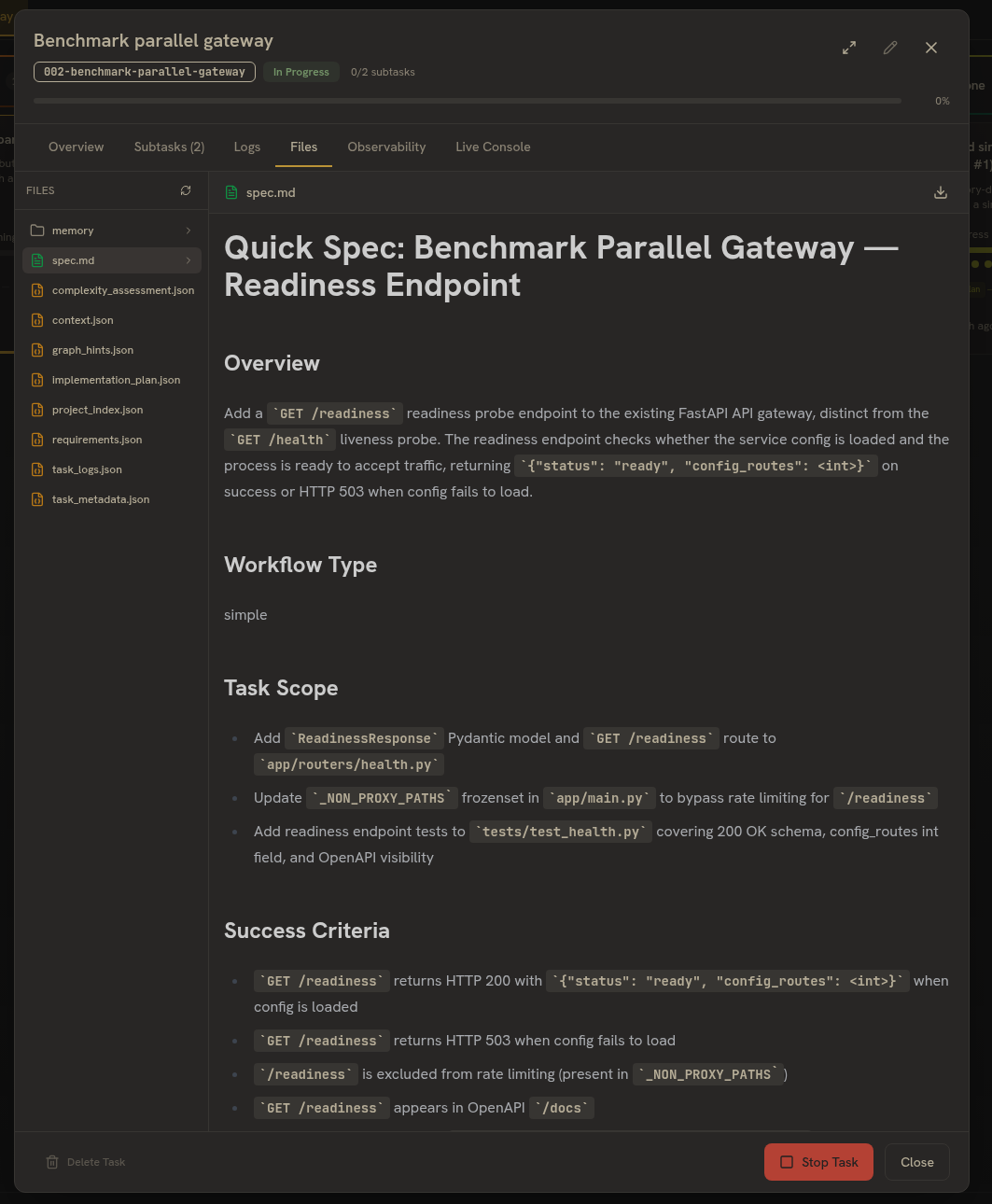
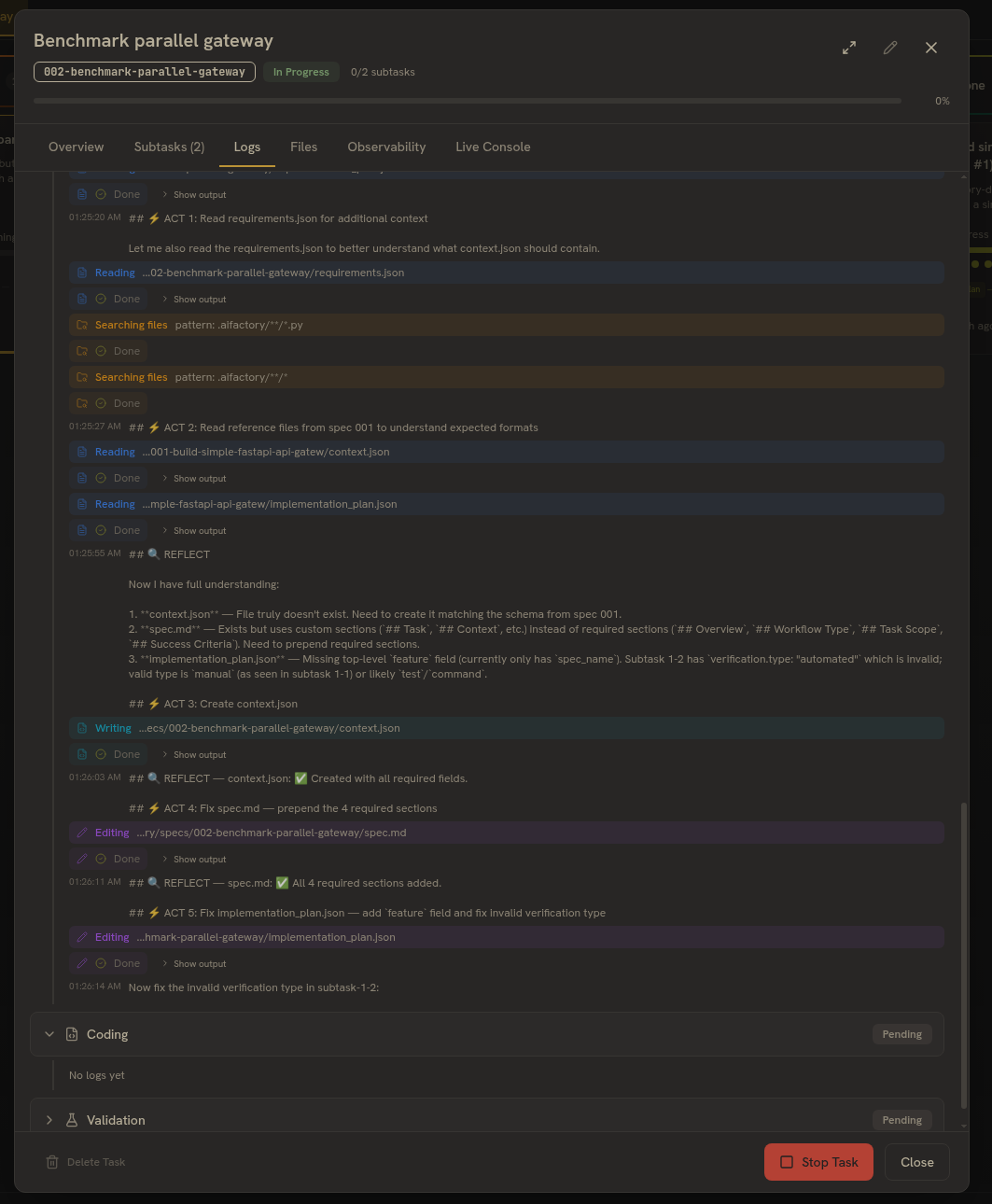
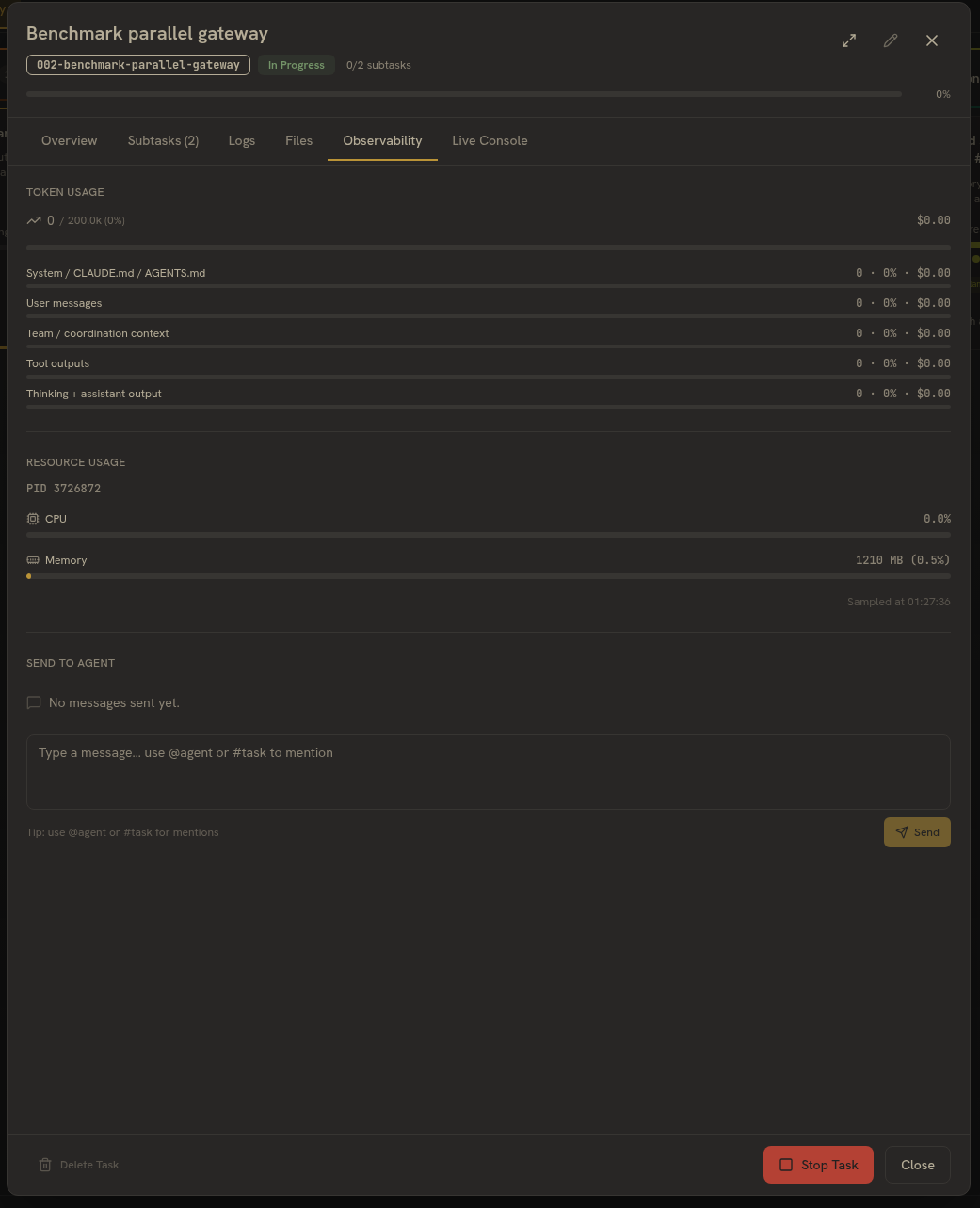
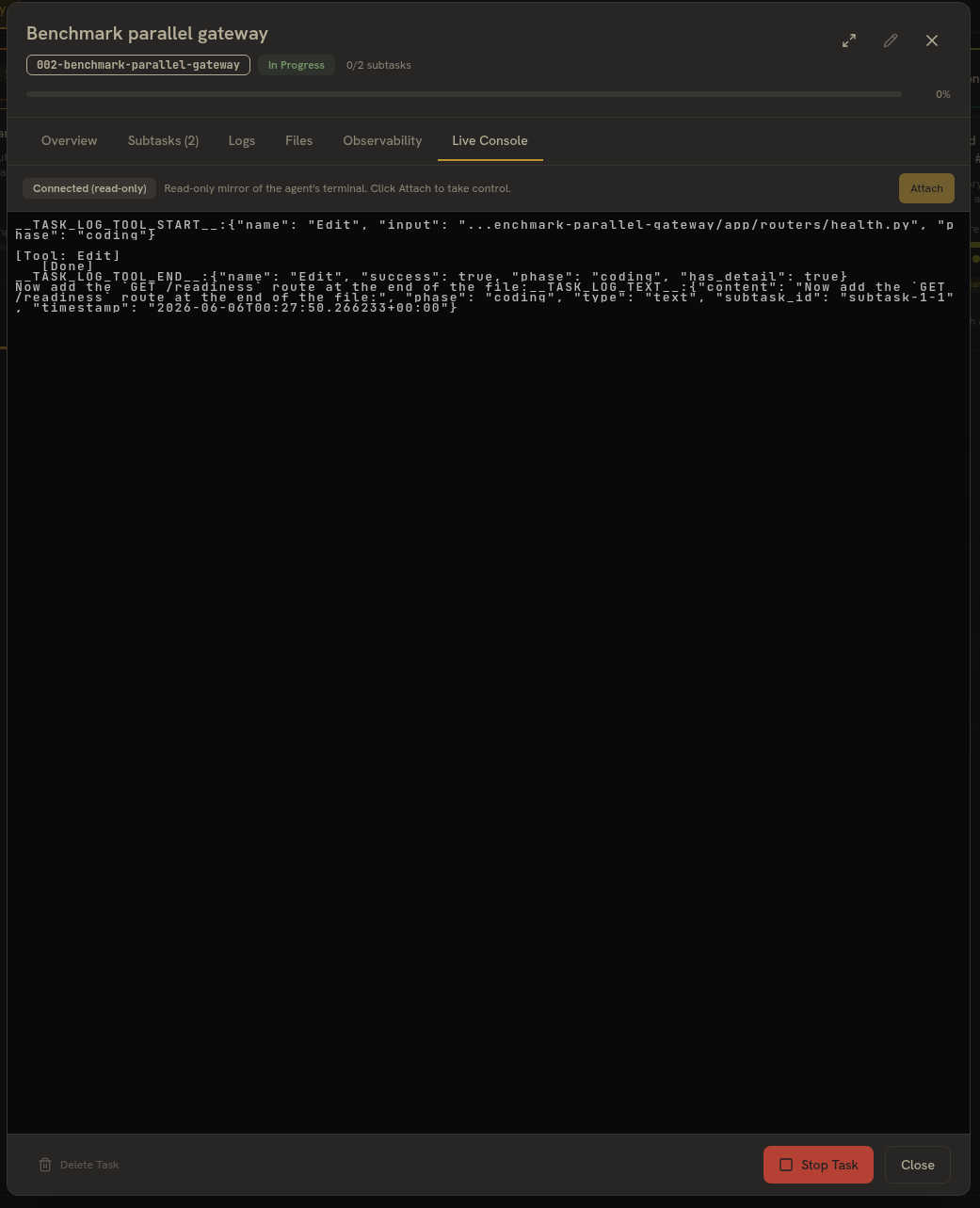
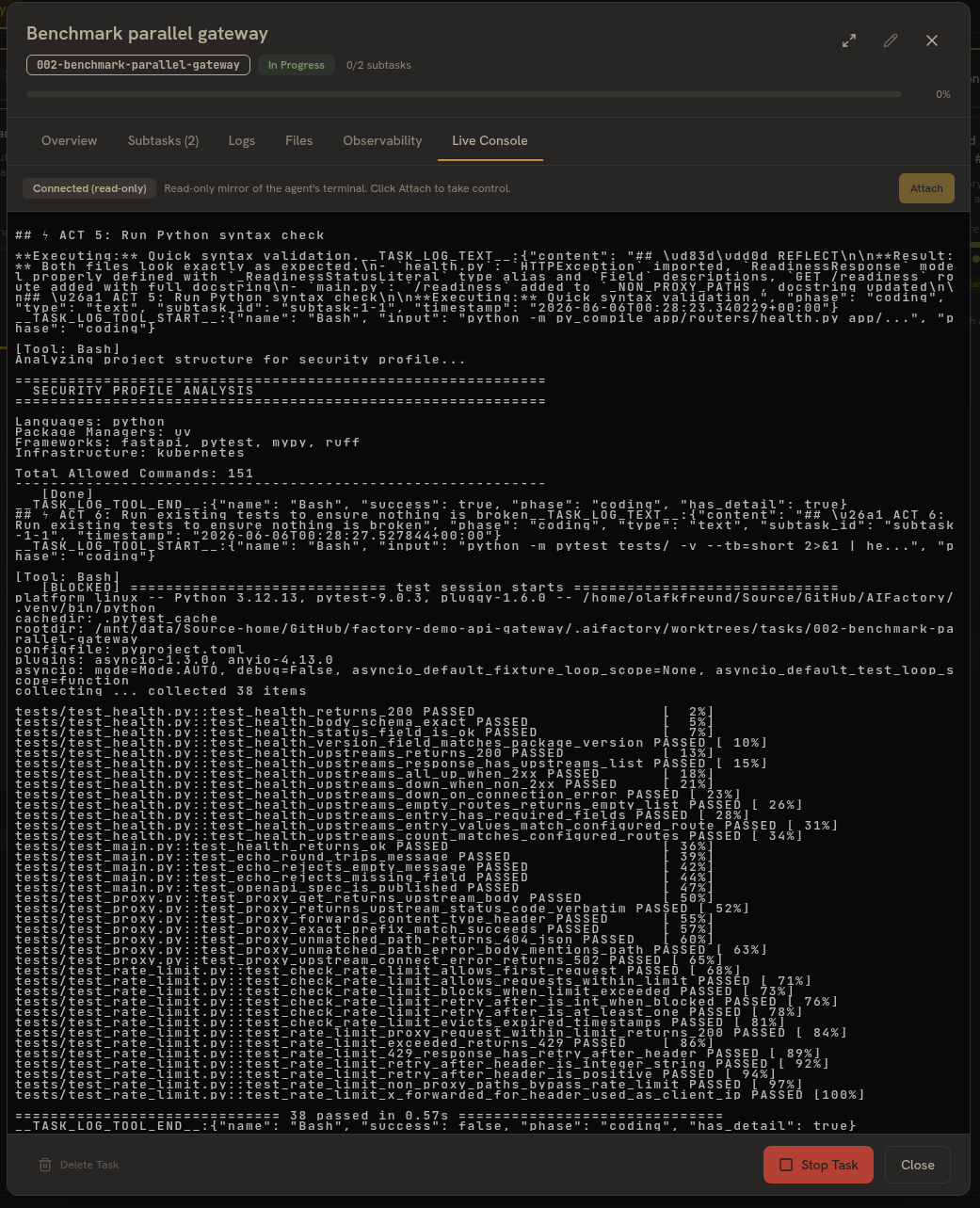
Open any task for the full story: the intent, the decomposed plan, the generated spec, the streamed PARR log, live resource/token observability, and a read-only mirror of the agent’s terminal you can attach to at any time.

Per-worker, per-provider observability
AIFactory runs parallel coding workers across providers — Claude, Gemini,
and local Ollama models side by side. Now it emits real OpenTelemetry
per-worker metrics from the web-server (labelled by provider and model, with
bounded cardinality), streams live worker events with a 10-second heartbeat,
and reports cost per worker through the v1.3 completion event
(workers[] / by_provider / by_model) instead of collapsing it to a single
model string. A soft, observe-only budget alert surfaces when a task crosses
a threshold without ever killing the run. The result: you can finally answer, per
task and live, what a build cost, on which model, and where the time went.
Feeds the live build map, and proves it ran
The build stage now exposes per-subtask depends_on and started_at /
completed_at timing on /api/tasks/{id}, which CFactory turns into the
code-stage of its live execution diagram — the same DAG you watch
in the cockpit. AIFactory also honours the
RFC-0001a evidence gates: a build only
claims “passed” when it carries proof it ran — non-zero tokens and completed
phases — so an expired-credential build that consumes zero tokens is reported as
failed, not silently green.
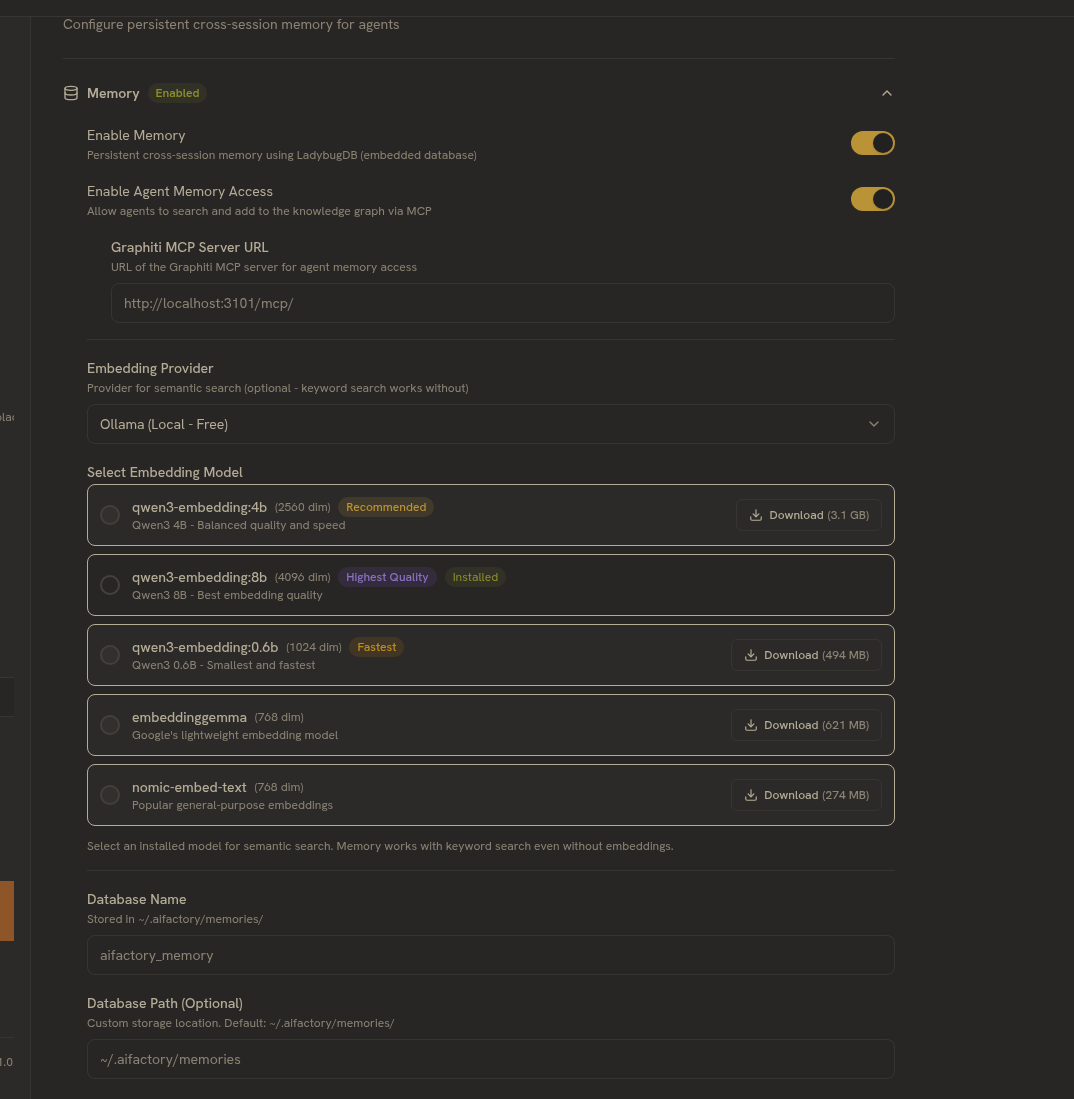
Memory & settings
AIFactory keeps persistent cross-session memory so agents carry context forward — backed by an embedded knowledge graph with selectable, local-first embedding models.