PFactory — a guided tour
PFactory is the planning layer that sits in front of the coding agents. It ingests a plan, enriches it with live organizational context (Kubernetes, cloud, Backstage, wikis), runs architecture / security / feasibility review gates with citations, records human approval, and only then emits governed GitHub issues for AIFactory to build.
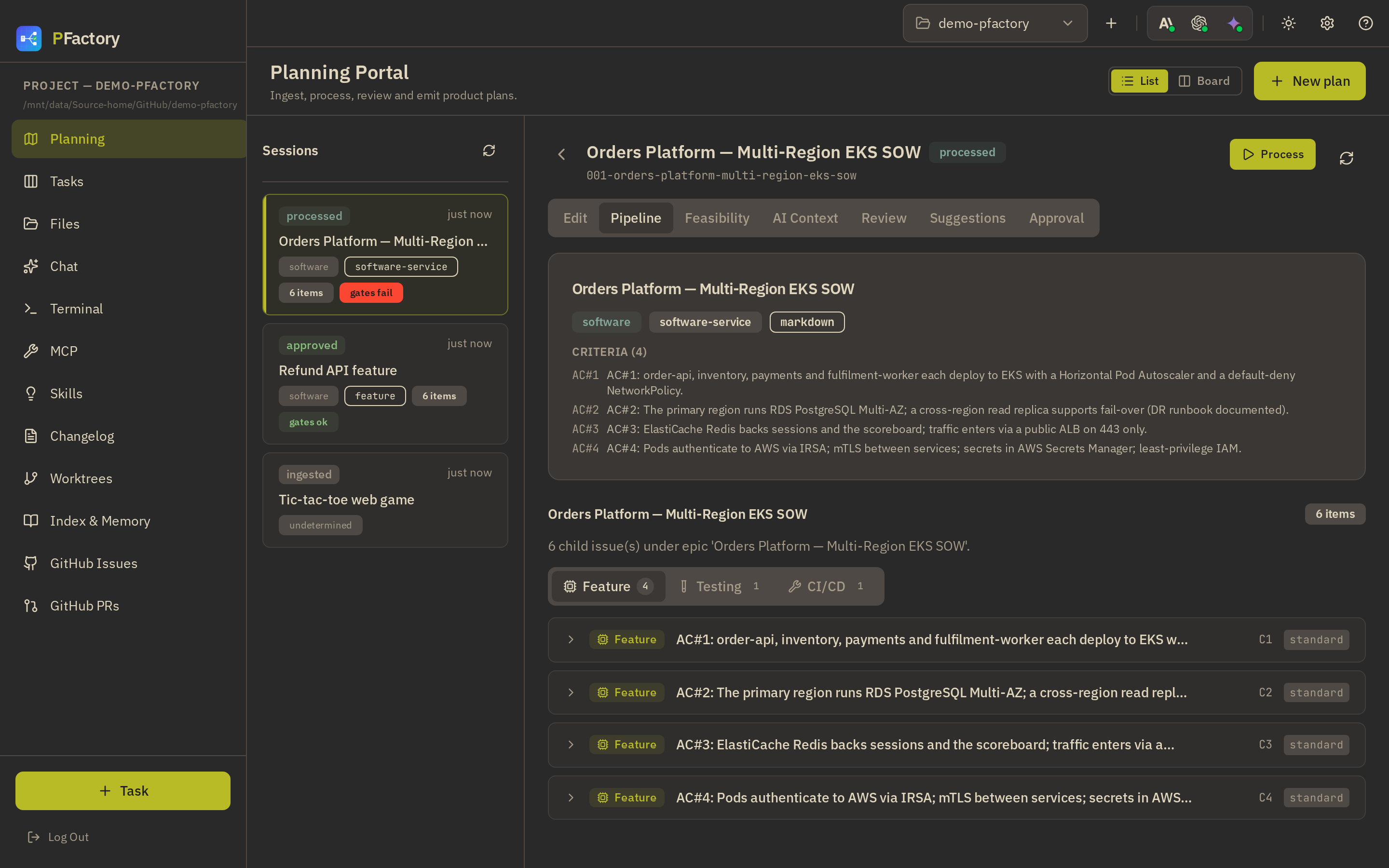
Plan, ground, govern
Every plan is enriched from real cloud + catalog state, decomposed into governed work, run through review gates whose every verdict is cited, and gated on explicit human approval before anything is emitted downstream.
When the plan targets an existing repository, PFactory also reads the code (RFC-0010). A read-only reconnaissance pass — static only, it never executes the repo — maps the languages, frameworks and infrastructure (e.g. the existing Terraform EKS resources and the files they live in), so the plan is delta-aware: it lists the real files each task will modify, takes its language from the repo rather than guessing, and surfaces the change footprint and blast radius for the human to approve. For a language rewrite (“port this from Python to Rust”) it captures both the source and target language and a behavioral contract, so the build generates the new language against the original as a reference oracle and TFactory proves the two behave the same.
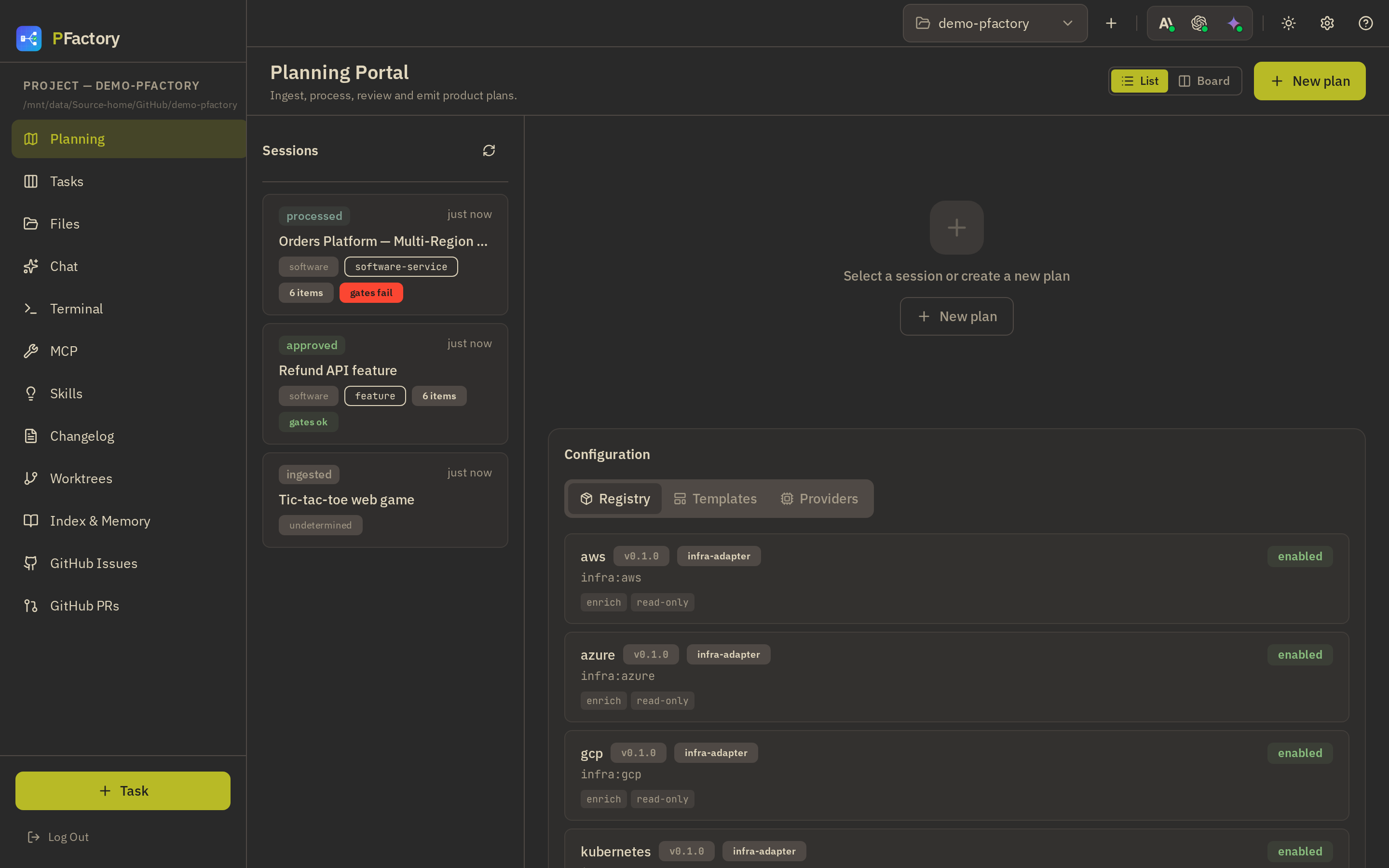
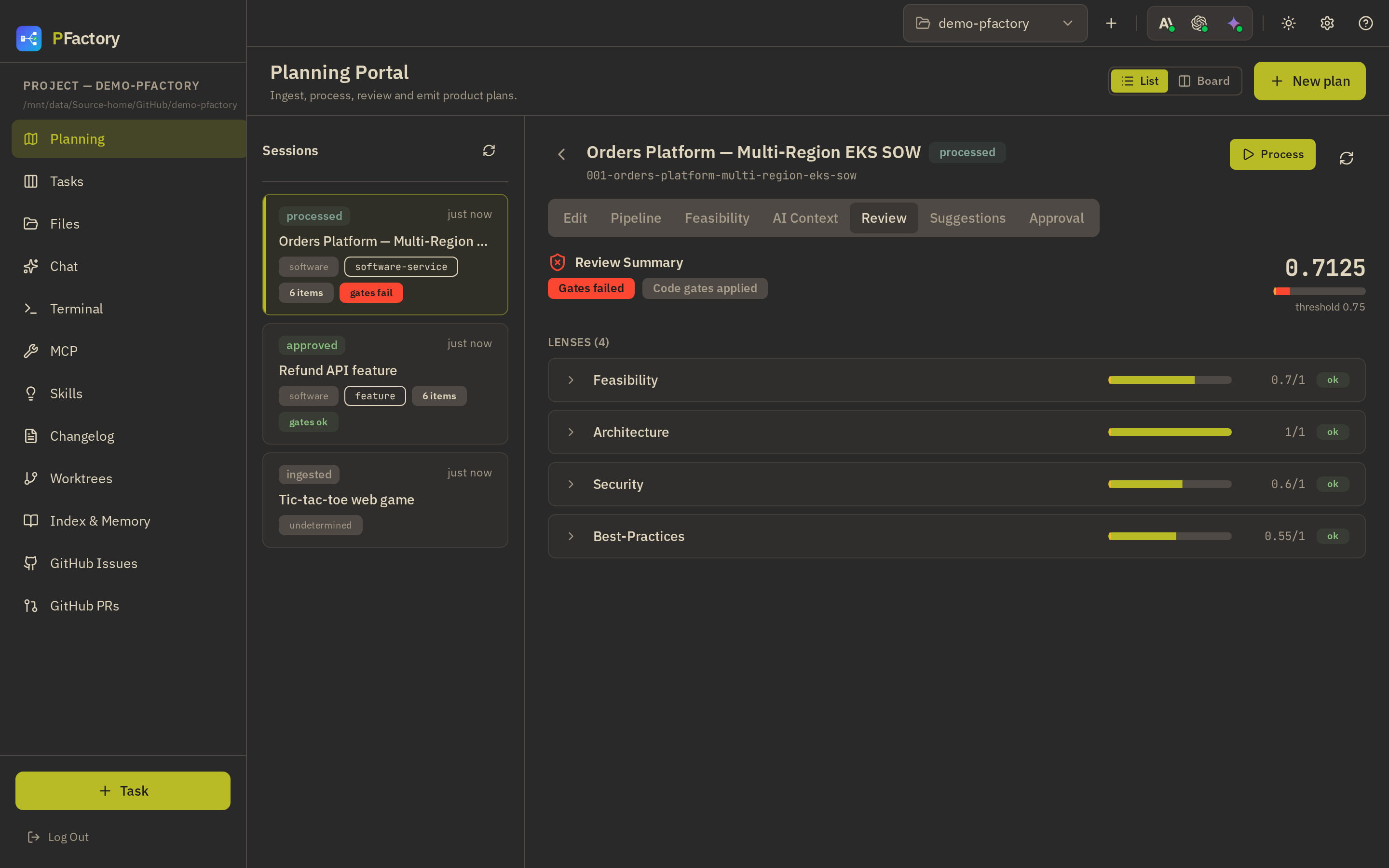
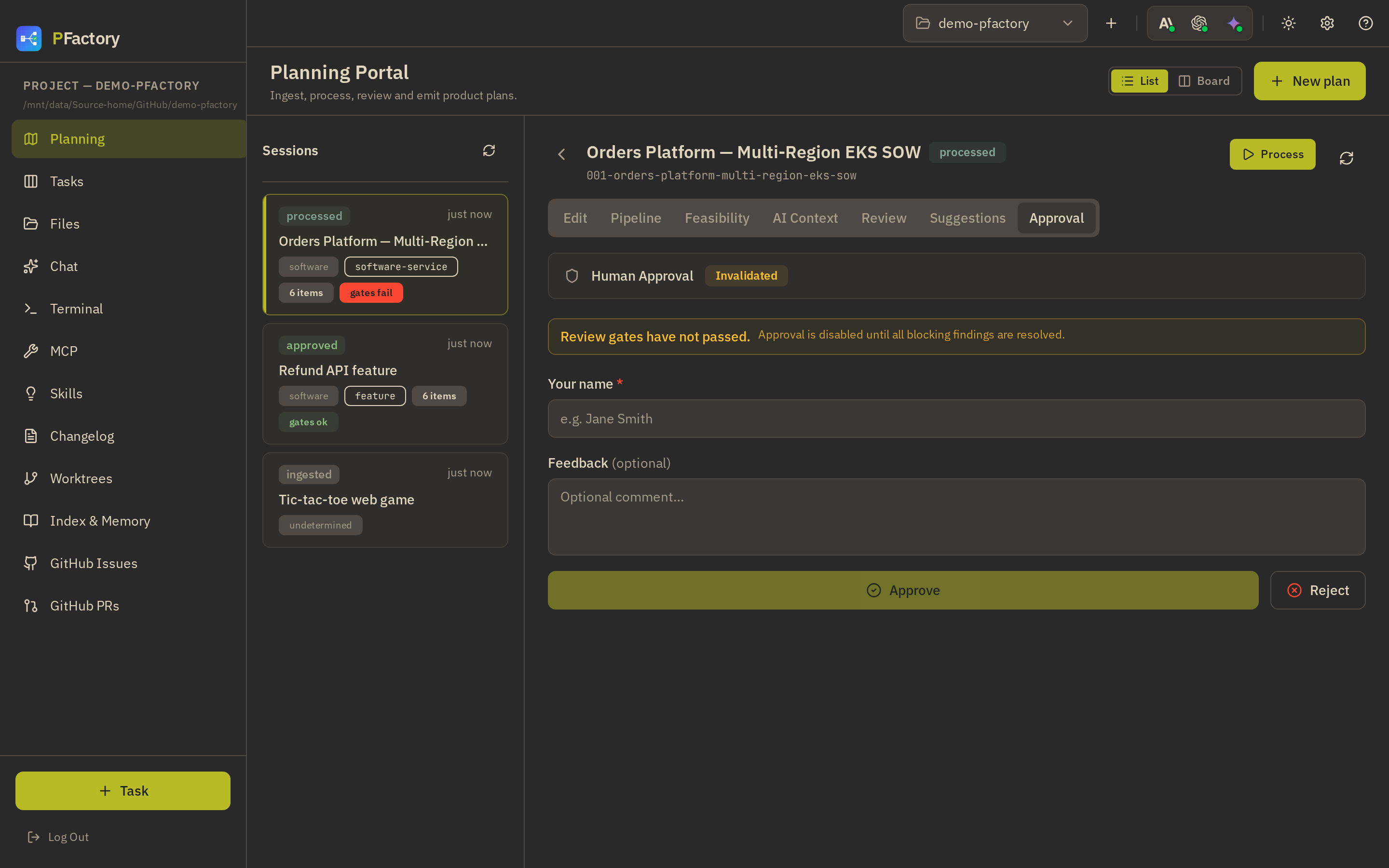
Feeds the live plan map, and proves the emit
The plan is already a dependency graph: the epic’s children (each with kind
and depends_on) are consumed by CFactory to render the plan-stage of its
live execution diagram, the fallback view shown before any code
task exists. PFactory also honours the
RFC-0001a evidence gates: a plan only
claims success when the emit actually created issues — an epic issue plus at
least one child — so a plan that governs but emits nothing is reported as
failed, not green.