Proof: the Factory logs into a live web app, finds the bug, and screenshots it
We deployed an authenticated web form to real AWS, had a TFactory-style browser test log in as a test user, exercise the UI, catch a deliberate validation fault, and record screenshots as evidence — then tore it all down. If it can do this, it can test and record almost anything.
After deploy-then-verify on real AWS, the next question was: can the Factory test something with a real UI and a login — and prove what it found? Not an API returning JSON; a web form behind authentication, tested in a real browser, with screenshots as evidence.
Yes. Here’s the proof.
What we ran
A FastAPI app — a login page + a protected “add contact” form — deployed
to AWS App Runner. The form had a deliberately planted bug: its email
validation was broken, so it accepted not-an-email and reported “saved”
instead of rejecting it.
A Playwright browser test (TFactory’s own patterns) then:
- Logged in as a test user —
auth.setup.tsfills the login form from injected credentials and saves the session (storageState), exactly how TFactory authenticates against a target. - Exercised the form step by step, screenshotting each state.
- Caught the fault — asserted the invalid email is rejected; the bug made that assertion fail, and the failing step captured the evidence.
The recorded evidence
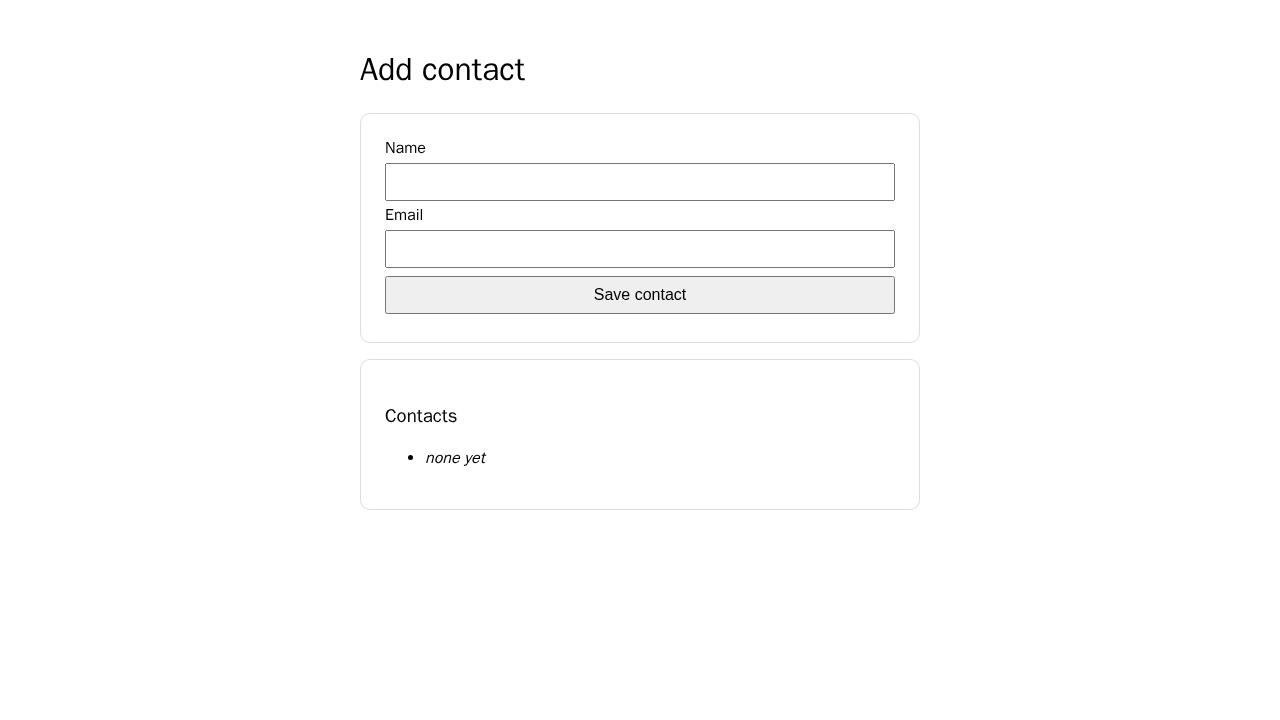
1 — logged in, the protected form loaded:
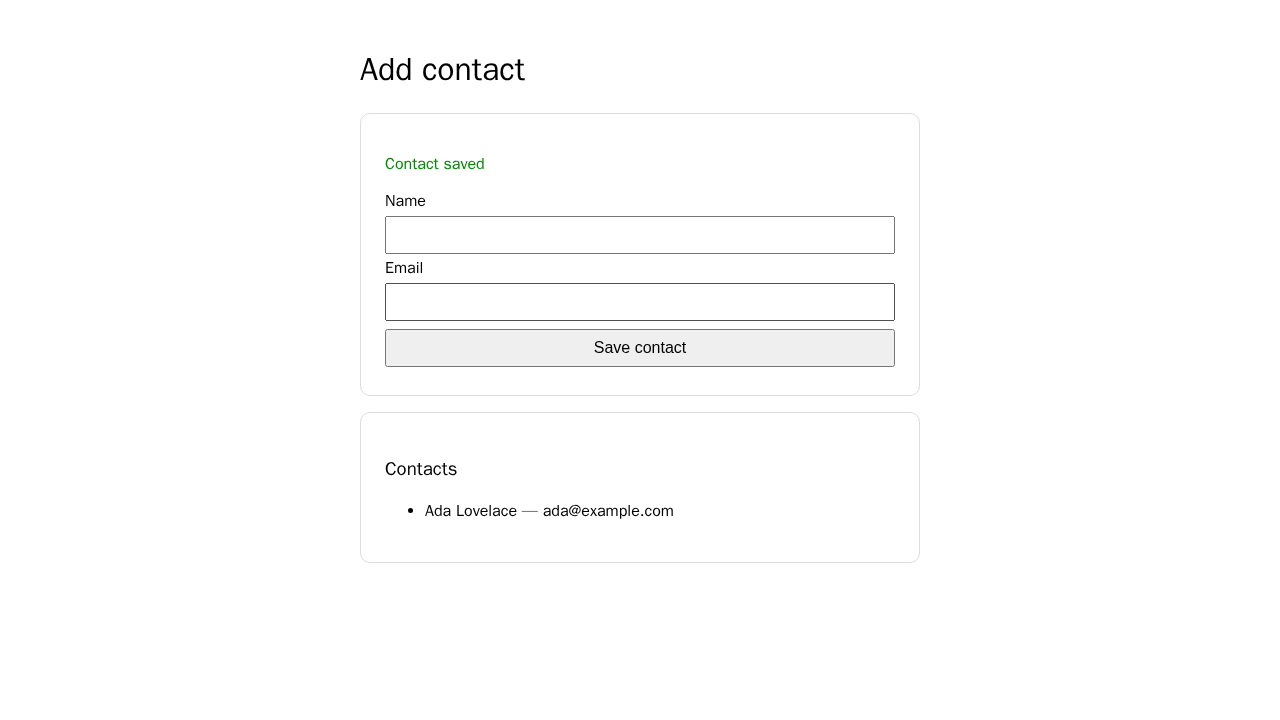
2 — a valid contact saved (the happy path works):
3 — the FAULT: an invalid email was accepted and shown as “saved”:
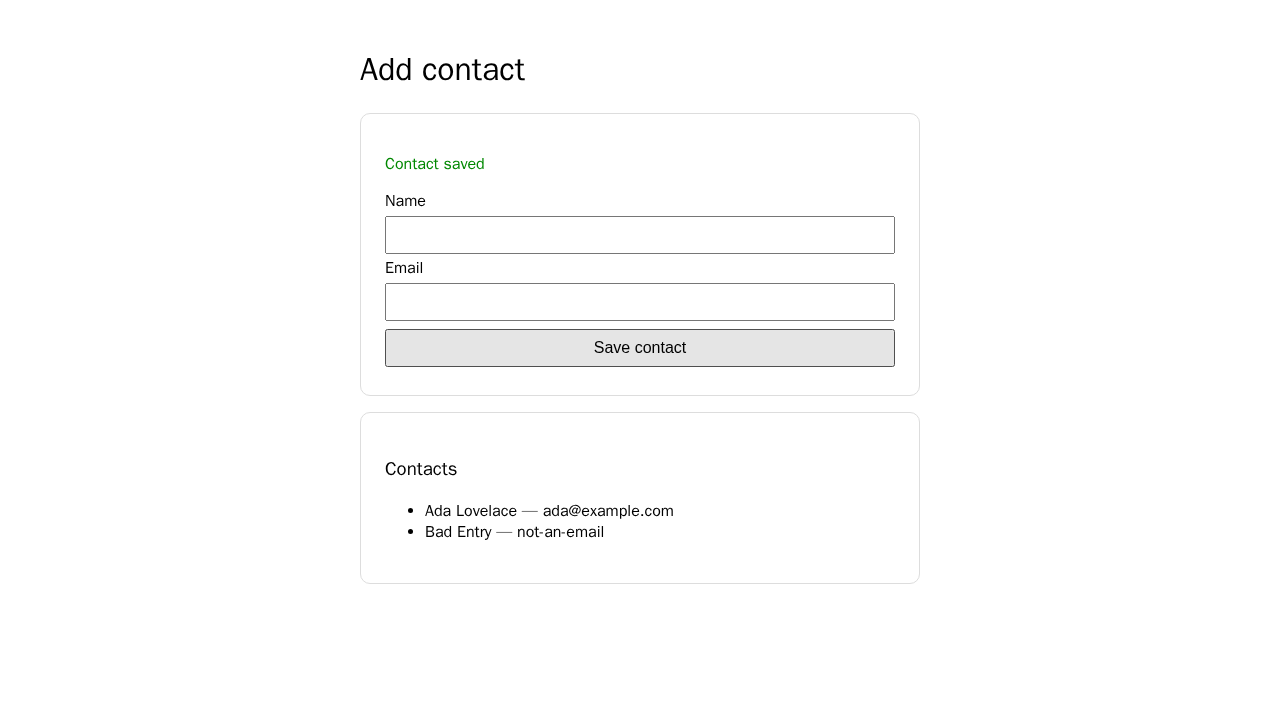
That third screenshot is the finding — the browser test logged the failure (“invalid email ‘not-an-email’ was accepted (expected rejection)”) and captured the screen that proves it. Verdict: fail, with evidence attached.
How the login works (the secrets bit)
TFactory keeps test-target credentials out of code. You store a kind=form
credential (encrypted at rest) via POST /api/test-credentials, then reference
it from .tfactory.yml:
auth:
  type: ref
  ref: login
  login_url: /login
  username_selector: "#username"
  password_selector: "#password"
  submit_selector: "#login-submit"
  success_url_pattern: "**/app**"
test_credentials:
  login: { ref: env:TEST_PASSWORD, as_username: TEST_USERNAME, as_secret: TEST_PASSWORD, kind: form }
The generated auth.setup.ts reads those at runtime (never inlined; secrets
redacted from logs), logs in once, and every test reuses the authenticated
session. Findings + screenshots are packaged into a report.md + meta.json +
screenshots/ bundle, surfaced via /api/visual-inspections.
Full runbook: Testing Authenticated Web Apps in the
Factory docs — what you need, how to add the secret, the
.tfactory.yml config, running it, and where the proof lands.
Cost guard
Real provisioning, real teardown: every resource is tagged factory-ephemeral
and named factory-<spec>-*; the run’s teardown destroyed all of it and left
the account’s existing infrastructure untouched. Verified empty after.
Why it matters
A login form with a planted bug is a stand-in for any UI behaviour you care about — checkout flows, dashboards, multi-step wizards. The Factory deploys it for real, logs in, drives it, and hands you screenshots of exactly what passed and what didn’t. Test and record almost anything — with proof.
Reusable as the /run-aws-webtest command. Real AWS, real browser, real
teardown; the recording/screenshots above are from the actual run.