One plan, two clouds: the Factory ships a live app to GCP and Azure through its own pipeline
PFactory plans it, AIFactory builds it, a GitHub Actions runner deploys it, TFactory plays the game and checks the score — and we have the screencast to prove it
We set out to answer a deceptively simple question: can the Factory take a plan written as a GitHub issue and carry it all the way to a running app on a real cloud, tested by a real browser, without a human hand-writing the deploy? Not a mock. Not a dry run. A live HTTPS endpoint you can click, on two different clouds, each verified by an automated test that actually plays the game and reads the scoreboard.
The answer is yes. Here is how the pipeline did it — and the receipts.
The mission: a tiny game with a real backend
The brief was deliberately ordinary, because ordinary is where the seams show: a browser tic-tac-toe game with a top-players scoreboard. A FastAPI backend. Redis for the live leaderboard, Postgres for durable scores. Deploy it to a managed platform — no Kubernetes, just serverless containers and managed data. Then prove it works by playing it.
That last clause is the whole point. Anybody can terraform apply. The interesting
part is closing the loop: the same system that planned the work also has to walk up
to the deployed thing and beat it at tic-tac-toe.
PARR: plan, act, review, repeat — across four services
The Factory is four services that hand work to each other, correlated by a GitHub issue number:
- PFactory ingests the plan, runs it through review lenses, and decomposes it into a tracked epic plus child issues — including a test issue routed to TFactory.
- AIFactory picks up the signed contract, spins up an isolated git worktree, and drives a coding agent through every subtask and a QA gate.
- A GitHub Actions runner stands the infrastructure up with Terraform.
- TFactory drives a real headless browser against the live URL and renders a verdict.
The handoffs are real network calls between real services. The plan that started as prose came out the other end as a deployed, tested application.
Win #1: the planner understands “deploy to a PaaS”
When the plan says “deploy to GCP Cloud Run with Redis and Postgres,” PFactory now
reads that intent. A new detection pass resolves the managed-platform target and the
data services from the plan text and writes them onto the contract’s deployment
block — managed_services: [postgres, redis] — so everything downstream knows this
is a managed-platform deploy, not a Kubernetes one. The review lenses scored the
plan 0.97 once it carried an explicit security posture (public-by-design, validated
inputs, least-privilege identity, secrets only in CI). Gates passed. The plan
emitted.
Win #2: the deploy artifacts are proven, not guessed
The riskiest thing an AI can do is hallucinate infrastructure. So the consuming side
is deterministic: AIFactory scaffolds the cloud’s Terraform and the GitHub
Actions deploy workflow from a vendored template pack — the exact templates we have
deployed and tested live — rather than letting a model invent a provider block. When
the target repo already carries good infrastructure, the coder verifies it
against the acceptance criteria instead of rewriting it. Boring, on purpose. Boring
is what you want holding a terraform apply.
Win #3: it actually plays the game
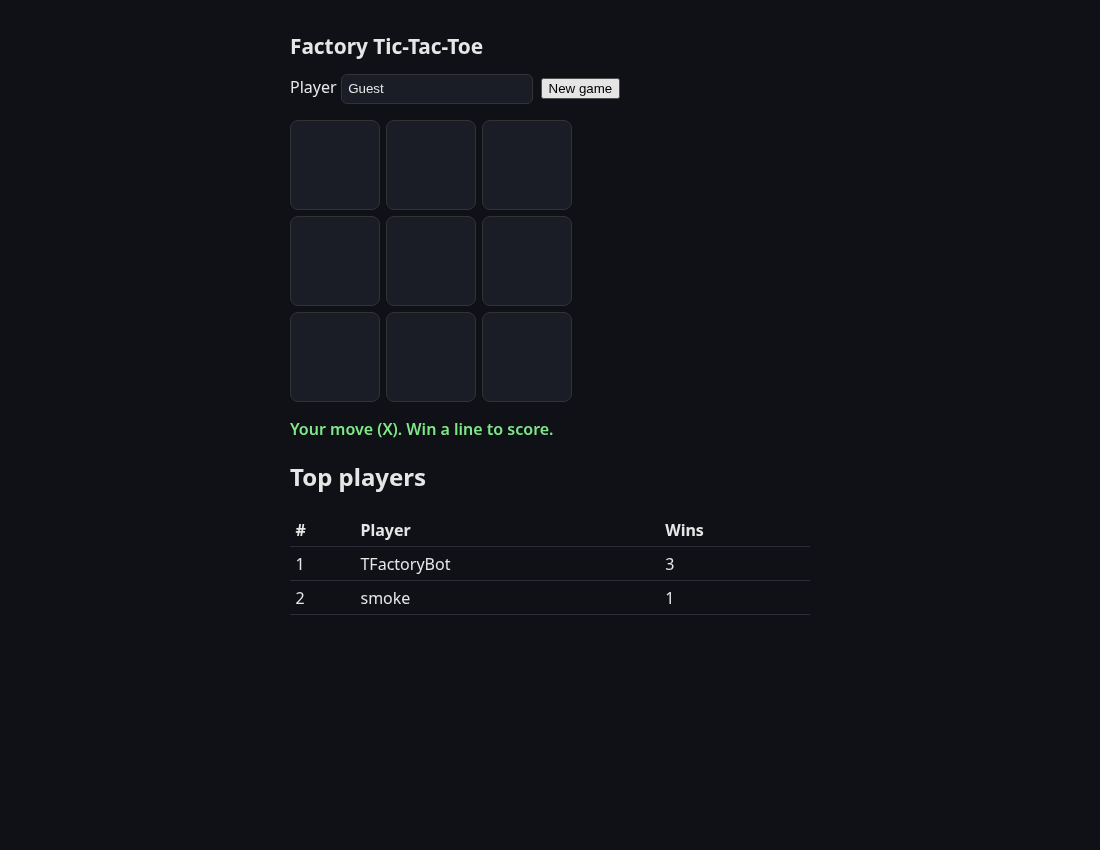
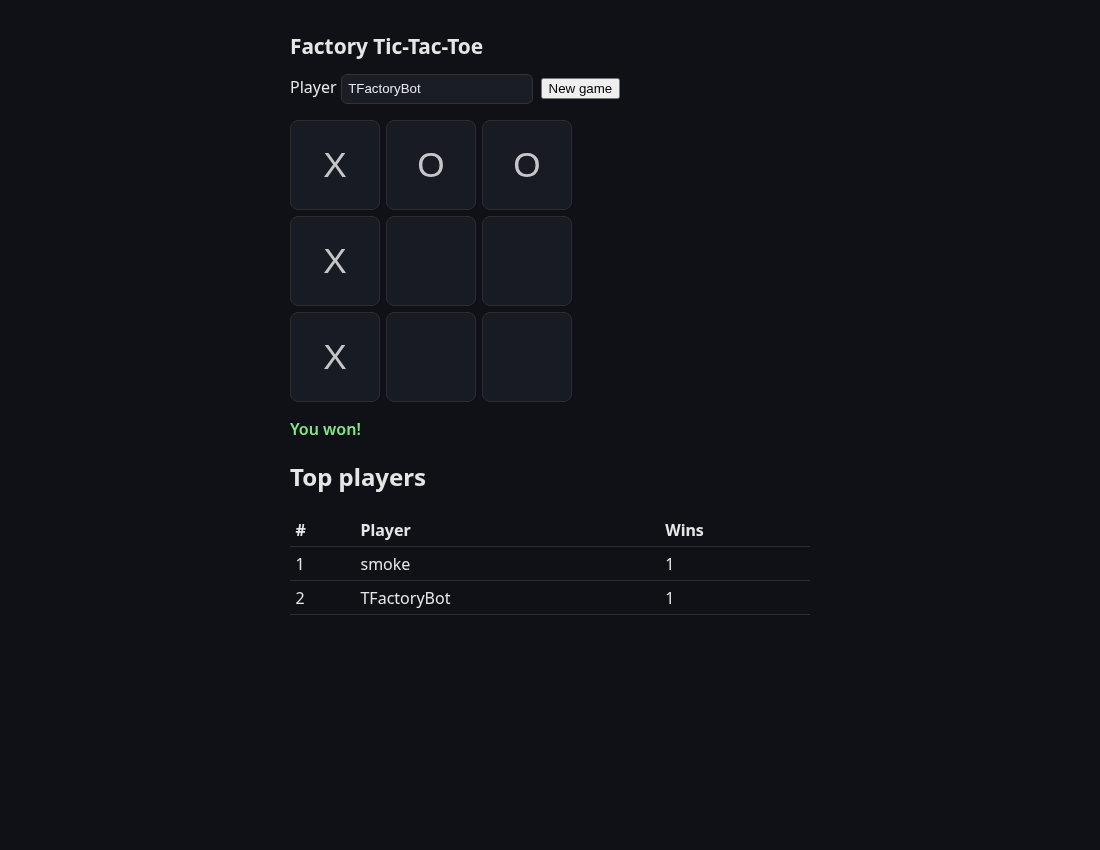
This is the part that makes it real. TFactory’s browser lane opens the deployed URL, types a player name, and plays three full games to a win — clicking cells, watching the win banner fire — then reloads and asserts the top-players scoreboard shows that player at number one. Not a screenshot diff. A semantic assertion against live state served from Postgres and cached in Redis.
Here is the GCP run, on Cloud Run, after the bot won three games:
A won game mid-flight:
Win #4: same plan, different cloud
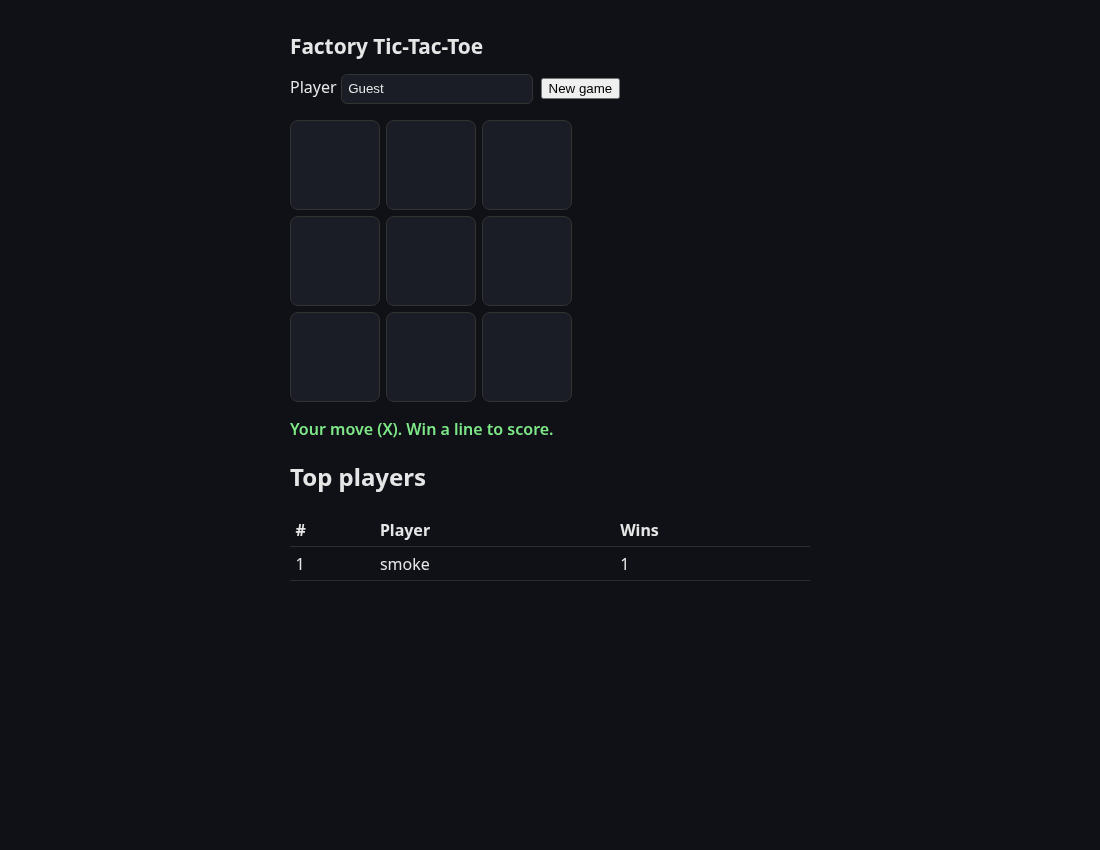
Then we did it again on Azure — and the only thing that changed was the deploy template. GCP got Cloud Run + Cloud SQL + Memorystore. Azure got Container Apps + Postgres Flexible Server + a Redis sidecar, because that subscription has no App Service VM quota and the classic managed Redis is retiring — exactly the kind of real-world wrinkle that separates a demo from a system. The app image was byte-for-byte identical; the Redis client just learned to speak TLS when the environment asks for it.
The Azure app, live on Container Apps:
And the Azure scoreboard, same bot, same verdict:
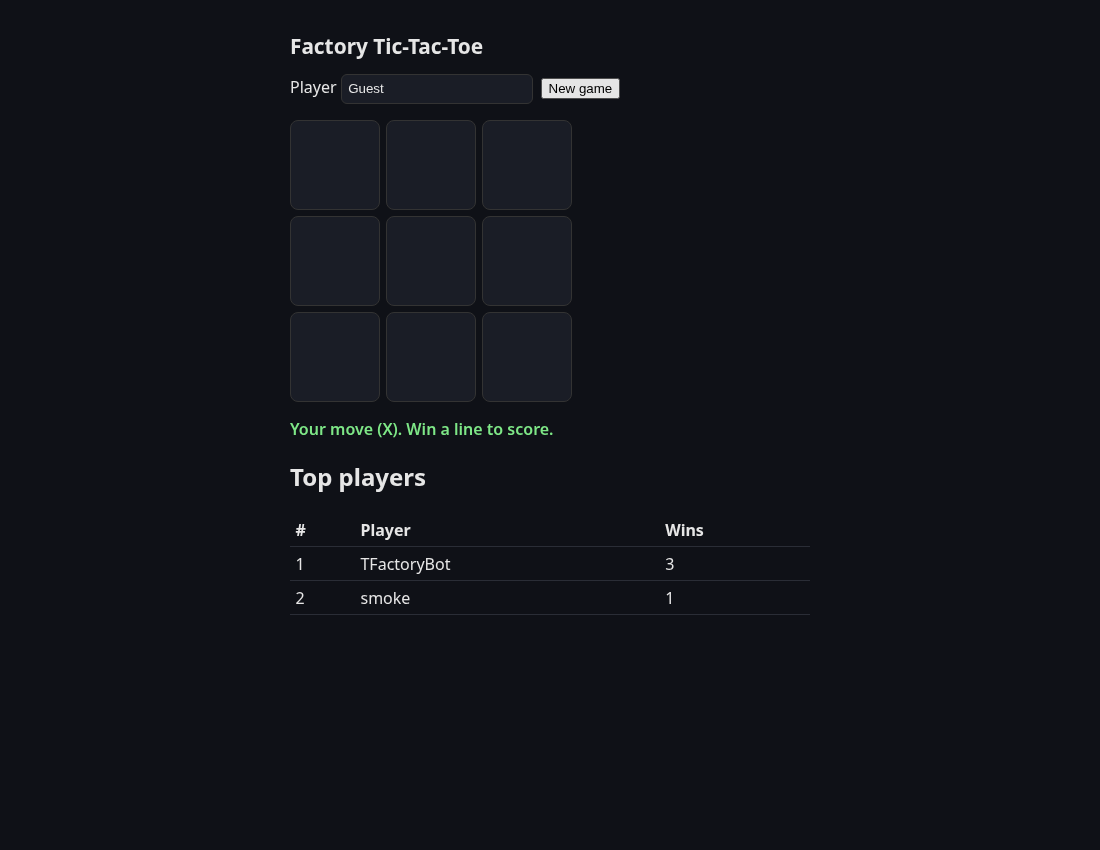
Every screenshot above was captured by the test itself, alongside a screencast of the full play-through, and published back into the TFactory portal as a finished, tracked run against its repo. The evidence lives where the team already looks.
The honest part
This was not frictionless, and pretending otherwise would be a disservice. Getting the pipeline to run clean on a live cluster meant fixing a chain of real gaps: rolling the new planner and scaffolder onto the packed Nix build image, clearing a review gate with a genuine security criterion, registering each repo as a project so the cross-service handoff could resolve it, pinning the coding agent to the model that is actually installed, reaping a failed build job that had wedged a task in a phantom “running” state, and clearing stale Terraform state that still believed in torn-down resources. None of those were new features. All of them were the difference between “works on my laptop” and “works in the factory.” Each one is now written down so the next run doesn’t relearn it.
And one more bit of honesty: because both target repos already held a working app, AIFactory verified the code against the plan rather than authoring it from an empty directory. That proves the whole pipeline end to end — plan, build-verify, deploy, test, evidence — but it isn’t greenfield code generation. So that is exactly what we are pointing the Factory at next: an empty repository, and a plan, and nothing else.
What it adds up to
One plan, written once, became a live application on two clouds, each one played and scored by an automated browser, each run tracked with screenshots and a screencast in the portal — and the only manual nudges left are the deliberate safety gates the Factory is designed to keep. The loop is closed. The test factory tests the factory’s own output, in production, on the cloud, and tells you whether it won.
Next stop: hand it an empty repo and watch it write the whole thing.